







How to layer bedroom lighting effectively
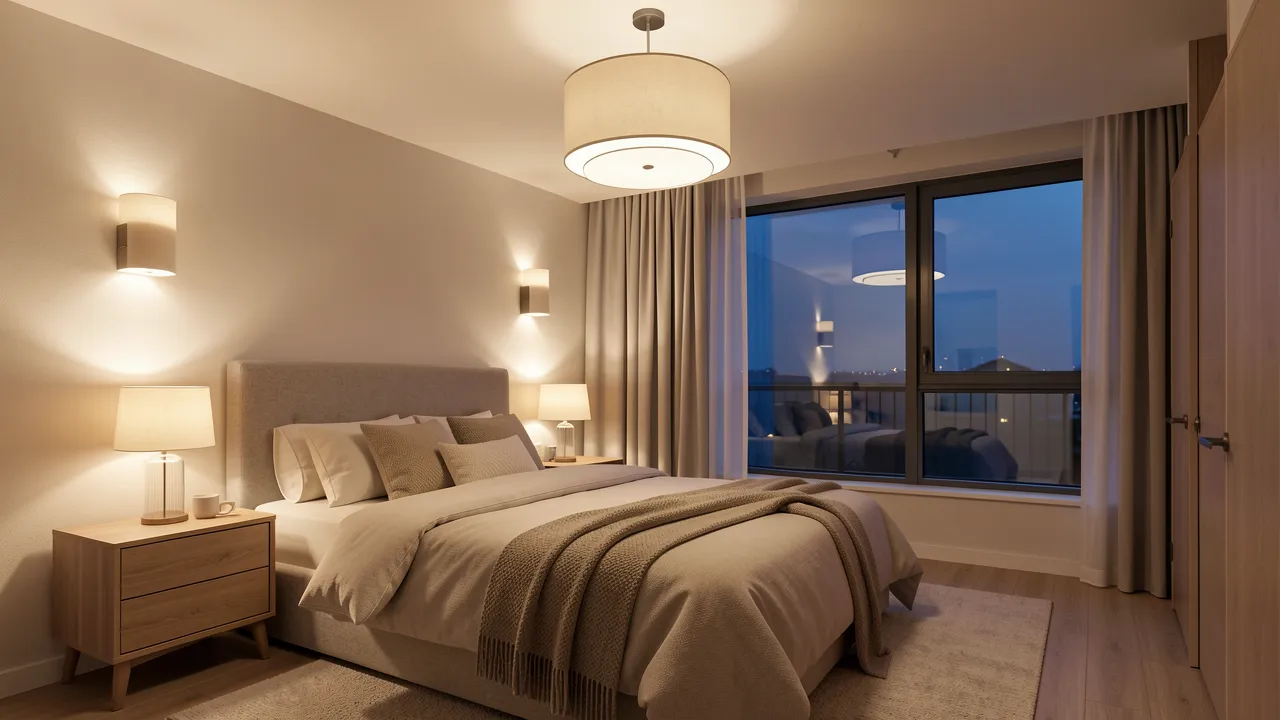
A well-lit bedroom should support more than one activity. You may read, dress, unwind, work briefly, or get ready for sleep in the same room. A single ceiling fixture rarely meets all of these needs. By combining several light sources at different heights and with separate controls, you can create a room that feels practical in the morning and restful at night.
Begin with the three layers of bedroom lighting
Effective lighting plans usually combine ambient, task, and accent lighting. Each layer has a distinct job, yet they should work together rather than compete.
Ambient lighting provides the general brightness that lets you move around safely. A ceiling pendant, flush mount, semi-flush fitting, or discreet recessed lights can fill this role. Choose a fixture that distributes light broadly, especially in a larger bedroom with dark walls or limited daylight.
Task lighting directs light where you need it most. Bedside lamps, wall-mounted reading lights, a mirror light, and a lamp near a desk all belong in this category. These fittings should reduce shadows without shining directly into your eyes.
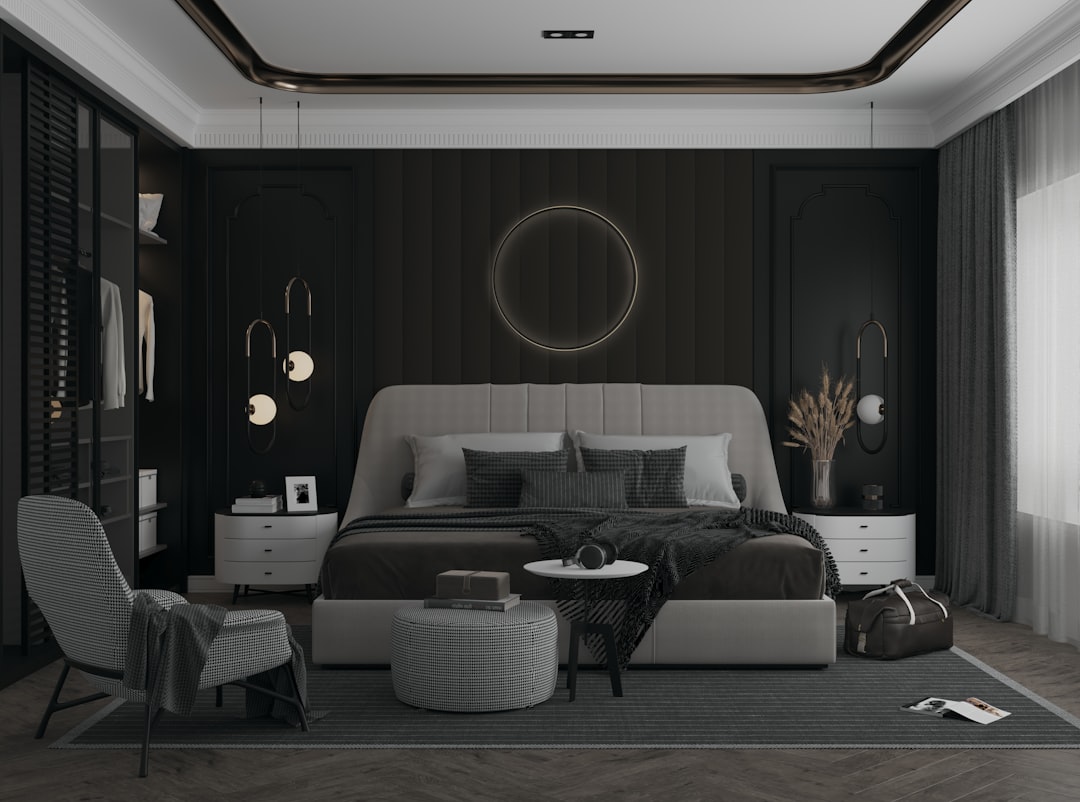
Accent lighting adds atmosphere and draws attention to features you enjoy, such as artwork, textured wallpaper, shelves, or a decorative headboard. It is not meant to light the whole room. A small table lamp, LED strip beneath a floating shelf, or a focused picture light can bring depth to the space.
Plan the room around your everyday routines
Before choosing fixtures, consider how you use the bedroom from morning to night. Think about where you put on clothes, whether you read in bed, how often you use a wardrobe after dark, and if your room includes a dressing table or workspace.
Place task lights close to their purpose. A bedside lamp should allow you to read comfortably without lighting the entire room. If you share the bed, individual lights with separate switches prevent one person from disturbing the other. Adjustable wall sconces are especially useful in compact bedrooms because they free up bedside table space.
At a dressing table, position lights on both sides of the mirror rather than relying on an overhead fitting alone. Side lighting softens shadows beneath the eyes and chin. In front of a wardrobe, ceiling spots or a nearby directional fixture can help you distinguish colours accurately.
Furniture placement influences lighting choices as much as the room dimensions. If you are rearranging the room, these Home Layout Optimization Tips for Functional Spaces can help you create clearer zones before selecting fittings.
Choose bulbs that support rest and comfort
Bulb temperature has a strong effect on the bedroom mood. For relaxing spaces, choose warm white bulbs between 2200K and 3000K. Their soft golden tone feels gentler in the evening than cool white light, which can seem clinical and overly energetic.
For a mirror or wardrobe area, a slightly more neutral bulb can be useful, particularly when you need to assess clothing colours or apply makeup. Aim for a high colour rendering index, ideally CRI 90 or above, so fabrics, skin tones, and painted surfaces appear more natural.
Brightness matters too. Instead of selecting one powerful fitting, spread moderate light across the room. A typical bedroom may need roughly 1,500 to 3,000 lumens in total, depending on its size, wall colours, and daylight. The benefit of layered lighting is flexibility: you can use every source while dressing, then switch on only bedside lamps for a quieter evening setting.
Avoid exposed bulbs that create glare at eye level. Frosted shades, fabric lampshades, opal glass, and indirect lighting soften the output while preserving useful brightness.
Use controls to make every layer more flexible
Separate switches are one of the most effective upgrades you can make. If all bedroom lights operate from a single switch, you lose the ability to adjust the atmosphere. Give the main light, bedside lamps, and accent lights independent controls whenever possible.
Dimmers give you control over mood and brightness without requiring new fixtures. They are particularly helpful for ceiling lighting, because a bright room is useful when cleaning or sorting clothes, while a low setting suits the hour before bed. Check that your bulbs and dimmer are compatible, especially with LEDs.
Smart bulbs and plugs can also make your routine smoother. You can schedule lamps to brighten gradually in the morning or turn off automatically after you fall asleep. Keep technology discreet, however. A bedroom should not feel like a control room. Simple, reliable settings are usually more useful than a long list of automated scenes.
Add character with small decorative light sources
A bedroom feels more inviting when not every source is overhead. A sculptural table lamp on a chest of drawers, a low lamp beside an armchair, or a subtle light within shelving can make the room feel more considered.
Repurposed pieces can provide distinctive bases for lamps or decorative illuminated furniture. If you enjoy personal projects, Upcycle Your Furniture: Creative Ideas for Chic Décor offers ideas that can help you give older items a new place in your bedroom.
Use decorative lighting selectively. One or two warm pools of light are often enough. Too many small lamps can create visual clutter, particularly in a modest room. Keep cables tidy, avoid placing lamps where bedding can touch hot bulbs, and ensure that any floor lamp has a stable base.
A balanced bedroom lighting plan creates comfort every day
When you layer lighting deliberately, the bedroom becomes easier to use at every hour. Start with broad illumination, add focused light where activities take place, then introduce softer details that reflect your style.
Keep these principles in mind:
- Combine ambient, task, and accent lighting rather than relying on one ceiling fixture.
- Use warm white bulbs for relaxation and high-CRI bulbs around mirrors and wardrobes.
- Give bedside lights separate switches, particularly in shared bedrooms.
- Fit dimmers where possible to change brightness as your routine changes.
- Place lamps at varied heights to create a softer, more balanced room.
- Choose decorative fittings that add warmth without overcrowding surfaces.
With thoughtful placement, suitable bulbs, and flexible controls, layered bedroom lighting can make your space calmer, more useful, and more personal.